
How to Become a Volunteer Guide in Japan: Goodwill Guide Registration, 95 Local Groups and When It Becomes Paid
Short answer
- There are two main ways to become a volunteer guide in Japan. You can register with the Japan National Tourism Organization (JNTO) as a "Goodwill Guide", or join a local volunteer guide group (an SGG).
- Anyone aged 18 or over who can give simple directions in a foreign language can register as a Goodwill Guide. JNTO accepts applications by post only, and the badge and card take about three weeks to a month to arrive.
- JNTO's list shows 95 volunteer guide groups (our count, November 2026). Tokyo has 10, more than any other prefecture.
This guide is for people living in Japan who want to show visitors around in English or another language. It also explains what changes when you start taking payment.
Two routes: Goodwill Guide registration and local groups
| Goodwill Guide | Local group (SGG) | |
|---|---|---|
| What you do | Help visitors you meet in town or at stations, on your own initiative | Show booked visitors around sights as part of a team |
| Where to apply | JNTO, by post | Each group directly |
| Requirements | Aged 18+, able to give simple directions in a foreign language | Set by each group |
| Assignments | None | The group takes bookings and shares them among members |
SGG stands for Systematized Goodwill Guides: volunteer groups formed by Goodwill Guides (JNTO Goodwill Guide page, in Japanese).
How to register as a Goodwill Guide
The Goodwill Guide movement began at the 1964 Tokyo Olympics and has run all year round since 1979. When you register, you receive a badge and card to show you are willing to help.
- Print the application form from JNTO's page. It asks for your name, address and the languages you speak. The form is in Japanese.
- Enclose a ¥140 stamp to cover postage.
- Post it to JNTO's Goodwill Guide desk in Tokyo. JNTO does not accept forms in person.
- Your badge and card arrive in about three weeks to a month.
If you cannot print the form, send JNTO a return envelope with a ¥110 stamp, and they will post one to you.
Two points to know. JNTO does not give registered guides instructions or assignments. It also takes no responsibility for accidents or trouble during your activities. Registration shows your goodwill; it is not a job registration.
The data: 95 groups nationwide, 10 in Tokyo
JNTO publishes a list of volunteer guides for visitors. We counted the groups on it by prefecture (as of November 24, 2026).
| Prefecture | Groups |
|---|---|
| Tokyo | 10 |
| Kyoto | 9 |
| Nara | 7 |
| Shizuoka, Hyogo | 5 each |
| Ibaraki, Chiba, Osaka | 4 each |
| 31 other prefectures | 1–3 |
| Total | 95 groups in 39 prefectures |
Eight prefectures have no group on the list: Aomori, Akita, Yamagata, Saitama, Mie, Tottori, Oita and Okinawa. If you live there, Goodwill Guide registration is the way to start.
What Tokyo's 10 groups look like
- Groups that cover all of Tokyo, or set areas such as Asakusa, Ueno and the Imperial Palace.
- Groups of students or university alumni.
- A Japanese Red Cross language volunteer group that focuses on visitors with disabilities.
- Groups that show one neighborhood in depth, such as Koto City or Nishiogikubo.
- A group that runs free weekend walking tours with no booking needed.
Membership rules differ by group. JNTO also tells interested people to contact the groups directly.
Visitors usually book two weeks ahead
The list includes 35 notes asking visitors to contact a group in advance. Of these, 23 say "at least two weeks". Volunteer tours are set up around members' availability, so last-minute requests are hard to accept.
Volunteer or paid: what changes
Since January 4, 2018, you no longer need a license to guide for pay in Japan (Japan Tourism Agency, in Japanese). Only people who passed the exam can use the license title (see do you need a license to be a tour guide in Japan).
| Volunteer | Paid | |
|---|---|---|
| Money | None (some groups ask visitors to cover the guide's fares) | A price you set |
| Foreign residents | No payment means it falls outside the work limits of your status | Depending on your status, you may need permission |
| Tax | None | You may need to file the income (see side job taxes in Japan) |
In both cases, you cannot book hotels or trains for visitors for a fee, or drive them for payment in a private car.
Some groups ask visitors to pay the guide's fares. For example, a group in Hikone, Shiga, charges ¥1,000 for the guide's transportation.
Foreign residents: check before accepting money
Article 19 of the Immigration Control and Refugee Recognition Act restricts "activities for which you receive remuneration" outside what your status of residence allows (e-Gov, in Japanese). Unpaid volunteering is not covered by this restriction. But if you accept any money, even as a thank-you or for fares, check with the Immigration Services Agency first. See can foreign residents work as a guide or interpreter in Japan.
Which suits you?
- Volunteering suits you if you want experience first, enjoy showing people your area, and do not need income.
- It does not suit you if you want an income, or you want to choose exactly which days you work (groups often schedule around their own calendar).
- Paid guiding suits you if you want to set your own content and price, or take on work beyond sightseeing, such as accompanying business visitors.
Some people do both: they build experience as volunteers, then start paid work later.
What to do next
- Find the groups in your prefecture on JNTO's list.
- Check each group's website for membership rules and activity days.
- If there is no group near you, print the Goodwill Guide form and post it.
- Before guiding for pay, read where the legal lines are in travel agency rules and unlicensed taxis.
For other ways to earn with your English, see side jobs where you can use your English.
Start paid guiding on jpwork hub
jpwork hub connects visitors to Japan with vetted people living in Japan, called partners. You can publish plans for interpreting, accompanying visitors or guiding, at prices you set. You do not need a license to register.
Registration is free and includes a review. A fee applies only when a request is confirmed and paid.
See how partner registration works
FAQ
Will JNTO send me guiding work after I register?
No. JNTO does not give Goodwill Guides instructions or assignments. To guide booked visitors, join a local group.
Can I register for languages other than English?
Yes. The form lists 11 languages, including Chinese, Korean, Thai and Indonesian, plus an "other" box.
Can I wear the Goodwill Guide badge while guiding for pay?
The badge shows volunteer goodwill. Keep paid guiding separate, under your own name.
Can foreign nationals register as Goodwill Guides?
JNTO's requirements are being 18 or over and able to give simple directions in a foreign language. No nationality requirement is stated.
Sources: JNTO Goodwill Guide page and application form; JNTO "List of Volunteer Guides"; Japan Tourism Agency, guide interpreter system; Immigration Control and Refugee Recognition Act, Article 19 (e-Gov). Information as of November 24, 2026. Group counts are our own count of JNTO's list.
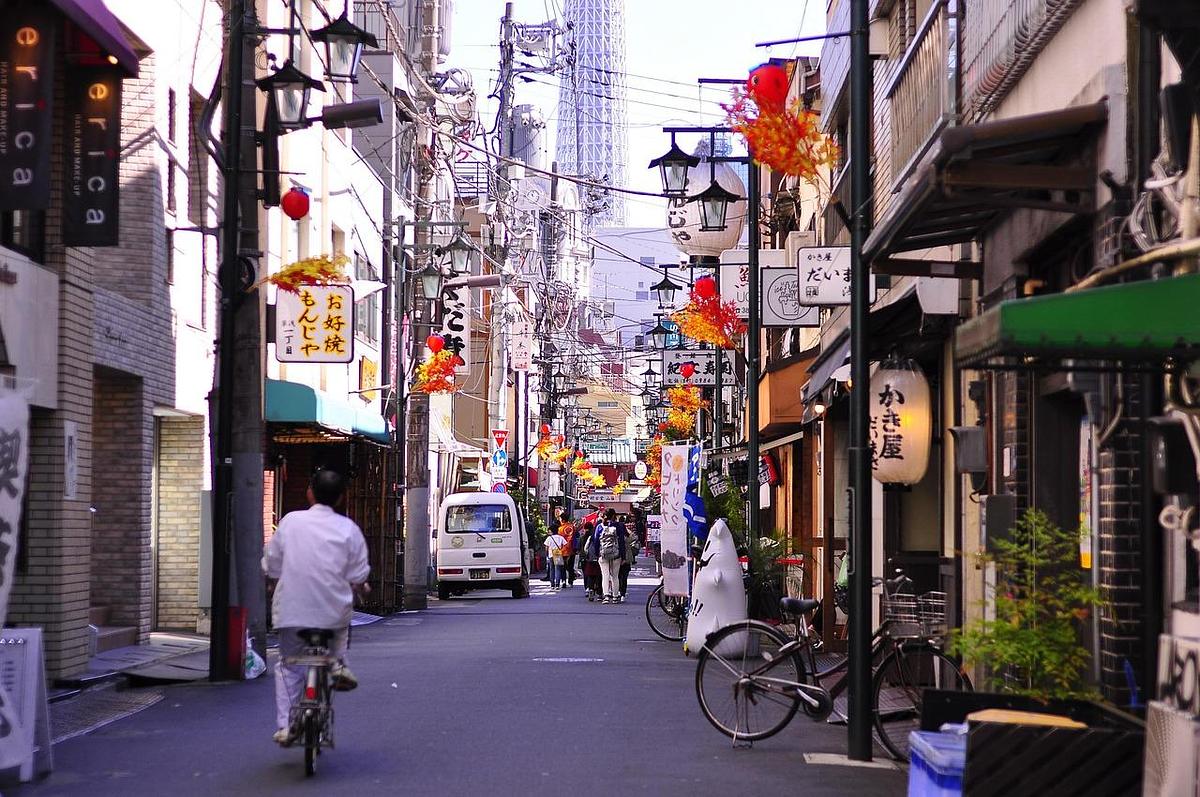
Photo: a Tokyo shitamachi street with the Skytree, Christozavic / Pixabay License (Pixabay).