
How to Become a Regional Guide Interpreter in Japan: The 43 Areas and Tokyo’s Rules
Short answer
- A regional guide interpreter (chiiki tsuyaku annaishi) is a license you get by completing a local government's training course, not a national exam. You may use the title only inside the area that government set.
- As of April 1, 2026, 43 areas in Japan run the system, and 4,260 people have been trained under it. If your area is not on the list, you cannot get the license there.
- Tokyo has the system, but its 2026 course is open only to taxi and hire-car drivers working in Tokyo. Other Tokyo residents can take the national licensed guide exam, or work as a guide without a license.
- First check the list of areas below. If yours is on it, ask the local government when it next recruits.
This article is for foreign and Japanese residents of Japan who want to guide visitors. If you are a foreign national, also check that your status of residence allows paid work (see side jobs for foreign residents in Japan).
What a regional guide interpreter is
A regional guide interpreter accompanies foreign visitors and guides them in a foreign language for payment, within a set area (Japan Tourism Agency, in Japanese). A city, town or prefecture runs the training, and people who complete it qualify for that area (Licensed Guide Interpreters Act, Art. 55, in Japanese). When they use the title, they must also state their area, and they may not show any other area (Art. 58).
National vs regional license
| National licensed guide | Regional guide interpreter | |
|---|---|---|
| How to get it | Pass a national exam and register | Complete a local government course and register |
| Where you can use the title | Anywhere in Japan | Only in the set area |
| Languages | The exam languages | Set by the local government |
| Training after registering | Required every 5 years | Not required by law (some areas offer it) |
The rules on languages and later training come from the Japan Tourism Agency's basic guidelines for regional guide interpreters (in Japanese). The guidelines say the system exists because national licensed guides are concentrated in big cities such as Tokyo and Osaka, and there are too few elsewhere.
The 43 areas (as of April 1, 2026)
According to the Japan Tourism Agency's status of regional guide interpreters (PDF, in Japanese), 43 areas run the system and 4,260 people have been trained in total. The largest and newest areas are:
| Area | People trained | Started |
|---|---|---|
| Okinawa Prefecture | 500 | April 2007 |
| Hiroshima Prefecture | 383 | April 2018 |
| Koya and Kumano area | 287 | April 2013 |
| Kyushu area | 259 | March 2014 |
| Fukushima Prefecture | 225 | April 2014 |
| Tokyo | 222 | June 2016 |
| Imabari City (recent) | 24 | April 2024 |
| Miyako City (newest) | 10 | July 2025 |
Hokkaido, Sapporo, Kyoto City, Nara, Kanazawa, Yamanashi, Kagawa and Kochi are among the other areas; the PDF above lists them all. The average is about 99 people per area, and the smallest, Rikuzentakata, has 8. Before 2018 the system had other names, and the list includes areas that started then. On April 1, 2017, special-zone guides of the older type numbered 2,052 in 26 areas (Japan Tourism Agency, in Japanese).
How to become one
- Check the list: make sure the area where you live, or want to guide, is one of the 43.
- Ask the local government: recruitment timing and methods differ by area, and the Japan Tourism Agency tells applicants to ask each one (how to become a regional guide interpreter, in Japanese).
- Complete the training: local history and sights, guiding in a foreign language and tour management. Some areas add a test or interview at the end.
- Register: apply to the local government and receive a registration card.
Areas without the system cannot license anyone until the local government makes a plan and the Commissioner of the Japan Tourism Agency approves it.
Tokyo: the 2026 course is for taxi and hire-car drivers only
Tokyo has trained 222 regional guide interpreters. Its 2026 course, however, is open only to taxi and hire-car drivers working in Tokyo with English at about TOEIC 600 or Eiken Pre-1 level (Tokyo Metropolitan Government press release, October 30, 2026, in Japanese).
- Applications: October 30 to November 30, 2026; 60 places, first come, first served.
- Training: 9 days between January 7 and February 18, 2027 (up to 56 hours), including 20 hours of tourism English and 12 hours of field practice.
- Test: an interview on February 24 or 25, 2027.
- Fee: ¥18,000 for the full course (course flyer, PDF).
- What it allows: guiding in English in Tokyo while using a taxi or hire car.
So if you live in Tokyo and do not drive professionally, this route is closed. To use a license title in Tokyo, you would take the national exam. See the future of the national licensed guide and how much licensed guides earn.
You can guide without a license
Since January 2018, anyone may guide visitors for payment. What you cannot do without a license is use the titles "national licensed guide interpreter" or "regional guide interpreter", or similar names (Art. 60). See do you need a license to be a tour guide in Japan. With or without a license, selling tours, booking transport or hotels, and driving visitors in your own car for payment fall under other rules. See travel agency rules and unlicensed taxis.
Who it suits, and who it does not
- Suits: people who live in one of the 43 areas, want to guide it in depth, and want a title without preparing for the national exam.
- Does not suit: people who want to use a title outside one area, live where there is no system, or live in Tokyo and do not drive a taxi or hire car.
- Alternatives: take the national exam, or start without a license and describe exactly what you offer.
Start guiding and interpreting on jpwork hub
jpwork hub connects visitors to Japan with vetted people living in Japan, called partners. With or without a license, you can publish plans for interpreting, accompanying visitors or guiding, at prices you set. If you hold a license, you can show it on your profile together with its area.
Registration is free, and a fee applies only when a request is confirmed and paid. Right now we especially need people who can interpret or accompany visitors at meetings and factory visits in Tokyo.
See how partner registration works
FAQ
Can I guide outside my area with a regional license?
Guiding itself needs no license. But outside your area you may not call yourself a regional guide interpreter, and when you use the title you must state your area.
Can I hold the license for two or more areas?
We found no rule in the Act limiting you to one area. Some areas, like Tokyo, restrict who can take the course, so check each recruitment notice.
Is it available in languages other than English?
It depends on the area, because each local government sets the languages. Check the recruitment notice.
Does the training cost money?
It differs by area. Tokyo's 2026 course costs ¥18,000 for all subjects.
Sources: Japan Tourism Agency, status of regional guide interpreters (as of April 1, 2026) and basic guidelines; Tokyo Metropolitan Government press release (October 30, 2026); e-Gov law database, Licensed Guide Interpreters Act. Information as of November 20, 2026. This article is general information, not legal advice.
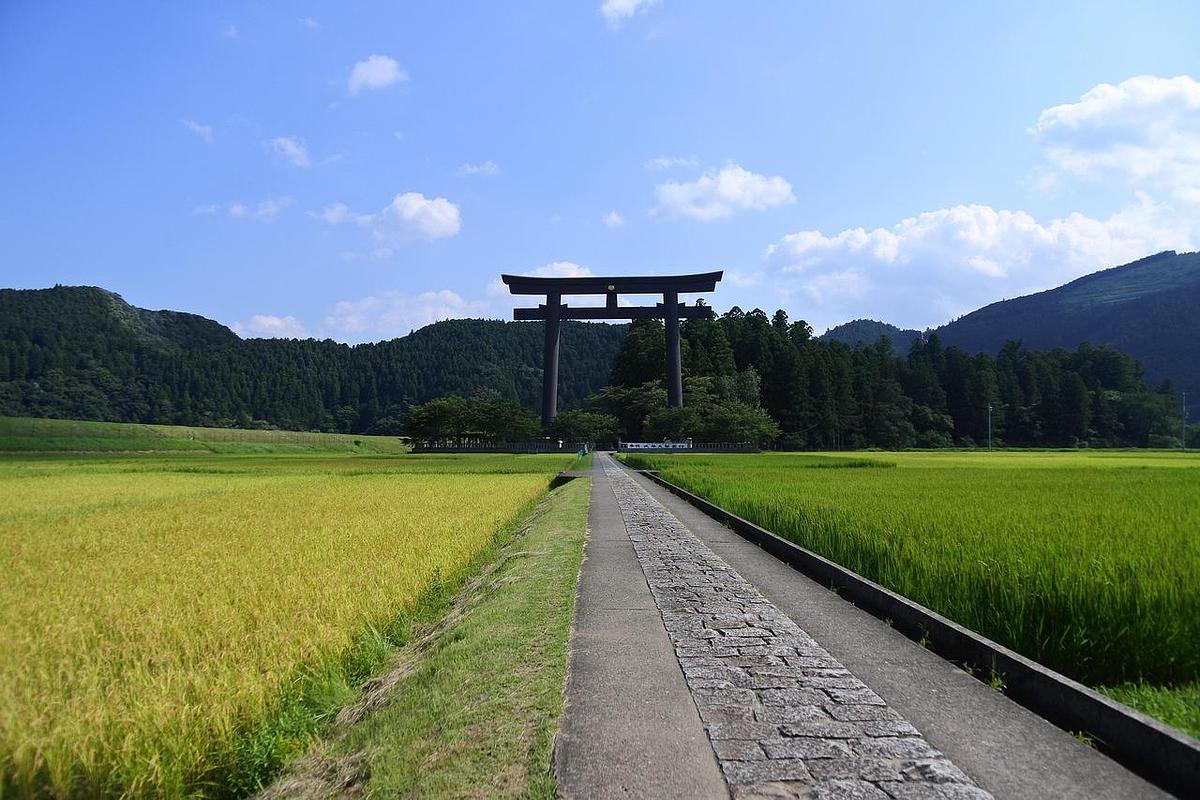
Photo: The great torii at Oyunohara, Kumano Hongu Taisha (Wakayama), kekopi / Pixabay License (Pixabay).