
How to View Property in Japan From Overseas: Proxy Viewings, Online Paperwork and Rules for Foreign Buyers
Key points
- In general, there is no nationality or visa requirement to buy property in Japan. Two filings can still apply: a report to the Ministry of Finance when a non-resident buys, and a prior notice for land in some designated areas.
- Most listings and most explanations are in Japanese, and the agent you meet usually works to close the deal for that property. Photos rarely show noise, sunlight or the area around the building.
- You do not always have to fly in for a viewing. A video-call viewing with the agent, or a proxy viewing by someone on your side, can come first.
- For purchases, the legal explanation of important matters can be done online, and contract documents can be sent electronically if you agree.
Can foreigners buy property in Japan?
In general, yes. Japan does not limit property purchases by nationality or visa status. Two procedures are worth knowing before you start:
- Report by non-residents: when a non-resident acquires real estate in Japan, a report must be submitted to the Minister of Finance through the Bank of Japan within 20 days of the acquisition. A resident agent, such as the real estate agent handling the deal, can submit it for you (Ministry of Finance leaflet, English).
- Land in designated areas: for land or buildings of 200 square meters or more in a "special monitored area" (mainly around defense facilities and remote border islands), both the seller and the buyer must notify the Cabinet Office before signing the contract (Cabinet Office, Japanese).
Ask your agent early whether either applies to the property you are looking at.
Why viewing from overseas is hard
- Language: most listings, building rules and disclosure documents are in Japanese.
- Whose side the agent is on: the agent showing you a property usually wants that property to sell. Their information is useful, but it is not an independent check.
- What photos do not show: trains passing at night, a dark room in winter, a busy road, damp smells, or how far the supermarket really is.
Three ways to view a property without flying in
1. A video-call viewing with the agent
Many agents can walk through a property on a video call. It is quick and free, but you only see what the camera shows, and the conversation is often in Japanese.
2. A proxy viewing by someone on your side
A local person visits the property for you, checks the points you care about and sends you photos, videos and a written report. Because they work for you, not for the sale, they can also check the area and visit at the times that matter, such as rush hour or late evening.
3. Visiting in person, with support
When you narrow it down to a few properties, an in-person visit is still the best check. A local partner can go with you, interpret with the agent and the building manager, and help you compare properties on the same day.
What to check on a proxy viewing
- Light and direction: which way the main windows face, and how much sun the room gets at the time of day you will use it.
- Noise: trains, main roads, schools, bars or construction nearby, ideally at more than one time of day.
- Damp and smells: signs of mold around windows, in closets and in the bathroom.
- Shared areas: the entrance, mailboxes, bicycle parking and garbage area. They show how well the building is managed.
- The area: the walk to the station, supermarkets, clinics and schools, and how the street feels after dark.
- Natural hazards: flood, landslide and tsunami risk on the government's hazard map portal.
Paperwork you can do online
- Explanation of important matters: before a purchase contract, a licensed real estate transaction specialist must explain the key facts of the property and the deal. For sales, this explanation has been allowed online since April 2021.
- Electronic documents: since May 18, 2022, the explanation document and the contract can be sent electronically instead of on paper, if you agree to it (All Japan Real Estate Association, Japanese).
- Brokerage fee: the law sets a maximum. For most properties, it is 3% of the price plus 60,000 yen, plus consumption tax. Special rules apply to low-priced vacant homes of 8 million yen or less (explanation, Japanese). This is a maximum, not a fixed price.
Whether a particular agent offers online explanations and electronic contracts is up to them, so ask at the start.
Get an independent local check on jpwork hub
On jpwork hub, you can post your area, dates and what you want checked for free. Real estate and living partners in Japan, including licensed real estate transaction specialists, offer proxy viewings with photo and video reports, research on the area and schools, and same-day support when you visit in person. Compare their profiles and plans, and pay online by card.
Partners do not introduce or broker properties through jpwork hub. If you later want a licensed agent to handle the purchase or lease, that is a separate contract with a licensed real estate business.
See Real Estate & Relocation Support
FAQ
Can I buy property in Japan without living there?
Yes. There is generally no nationality or visa requirement. As a non-resident, you need to file a report with the Ministry of Finance within 20 days of acquiring the property, which your agent can file for you. Getting a mortgage in Japan is often harder for non-residents, so check your financing early.
Can someone view a property in Japan for me?
Yes. The listing agent may offer a video-call viewing, and an independent local partner can visit for you and send photos, videos and a written report on the property and the area.
Can I sign a property purchase contract in Japan online?
For purchases, the explanation of important matters can be done online, and the documents can be sent electronically if you agree. Whether you can complete everything remotely depends on the agent and the deal, so ask early.
How much is the real estate agent's fee in Japan?
The law caps it. For most properties, the maximum is 3% of the price plus 60,000 yen, plus consumption tax. Agents can charge less than the cap.
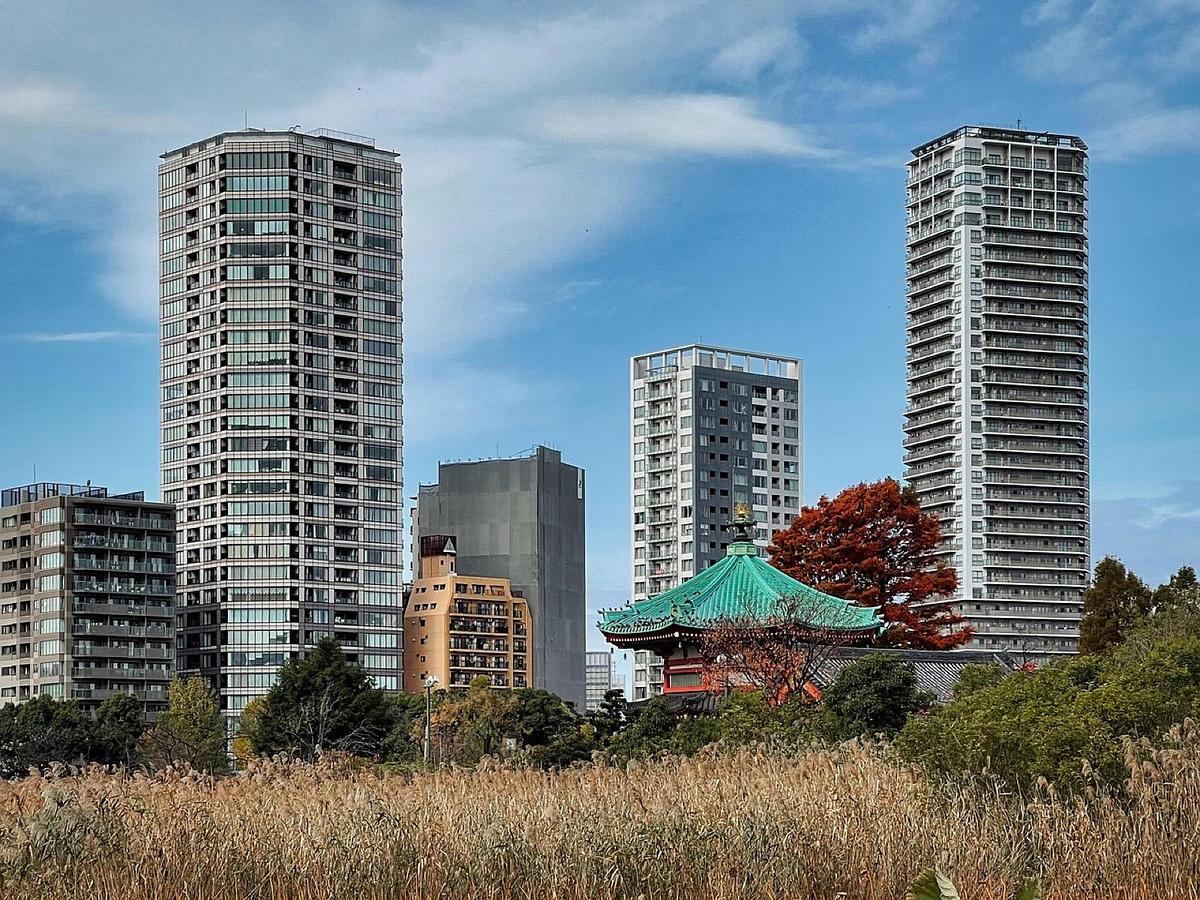
Photo: residential towers by Shinobazu Pond, Ueno, Tokyo by 16944022 / Pixabay License (Pixabay).